In the food and beverage industry, purity is everything. A single contaminant or a lingering plastic taste can ruin a production batch and damage a brand's reputation. This is why selecting the right transfer equipment is not just a technical choice—it is a safety imperative.
Food grade silicone tubing has become the industry standard for fluid transfer due to its unique ability to handle extreme temperatures while remaining odorless, tasteless, and chemically inert.
For production managers and quality control specialists, understanding the safety standards and applications of silicone is essential. In this guide, we explore why silicone is the superior choice for food processing and how to ensure you are buying high-quality, compliant tubing.
1. What Defines "Food Grade" Silicone?
Not all silicone is safe for food contact. Food grade silicone tubing is a specific formulation manufactured to meet strict regulatory standards. Unlike industrial rubber, it does not contain toxic fillers or plasticizers (like phthalates) that could leach into food products.
Key Characteristics:
Odorless and Tasteless: It will not alter the flavor profile of beverages, making it ideal for coffee, wine, and beer.
Thermal Stability: It can withstand temperatures from -60°C to 200°C, allowing for hot water cleaning and steam sterilization without melting or becoming brittle.
Resistance: It resists fungal growth and is unaffected by fats and oils (though specific grades are recommended for high-fat content).
2. Safety Standards: FDA and Beyond
When sourcing tubing, "food safe" is not enough. You need verified certifications.
FDA 21 CFR 177.2600
This is the primary regulation in the United States. It specifies the rubber articles intended for repeated use in producing, manufacturing, packing, processing, preparing, treating, packaging, transporting, or holding food.
LFGB (Europe) & NSF-51
LFGB: The German standard is often stricter than the FDA, requiring more intensive testing for silicone products sold in Europe.
NSF-51: Specifies requirements for materials used in commercial food equipment.
Need compliant solutions?All our Food Grade Silicone Tubing is manufactured to meet FDA standards, ensuring safety for your production line.
3. Top Applications in the Food & Beverage Industry
From micro-breweries to large-scale dairy plants, silicone tubing is the workhorse of the industry.
Brewing and Winemaking
Brewers love silicone because it is translucent and flexible. It is used to transfer hot wort and finished beer.
Coffee and Vending Machines
Inside every commercial espresso machine is a network of silicone tubes handling near-boiling water and steam pressure.
Dairy Processing
Milk and yogurt require strictly hygienic transfer lines.
4. How to Ensure Quality: A Buyer’s Checklist
How do you know if the tubing you bought is truly high quality?
The "Pinch Test": Bend the tube in half. If the fold turns white (whitening), it may contain cheap fillers. High-quality platinum-cured silicone usually does not turn white.
Clarity: Premium food-grade silicone (especially platinum-cured) should be translucent, not cloudy or yellow.
Smell: It should be completely odorless. A strong chemical smell indicates poor curing processes.
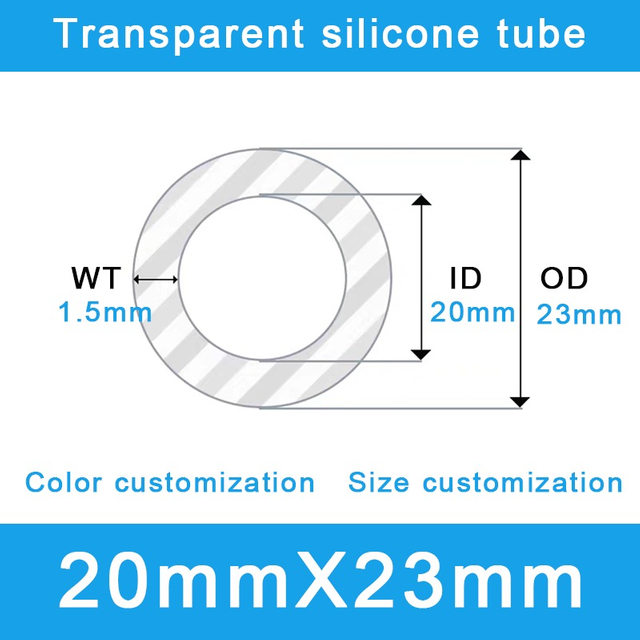
Customization: Does your equipment require specific dimensions? We offer custom silicone tubing to fit unique nozzle sizes and color-coding requirements for safety lines.
Comparison Note: While medical grade silicone tubing is also safe for food, it is often over-engineered (and more expensive) for food applications. Standard food-grade silicone offers the perfect balance of safety and cost-effectiveness.
5. Conclusion
Investing in high-quality food grade silicone tubing is an investment in your product's quality and your customers' safety. By ensuring your tubing meets FDA standards and is suitable for your specific temperature and chemical environment, you can run a safer, more efficient production line.
Explore our full range of Silicone Tubing to find the perfect solution for your food processing needs.
, Applications, and Quality Guide")
Frequently Asked Questions (FAQ)
Q: Is food grade silicone tubing safe for boiling water?
A: Yes, absolutely. Food grade silicone can typically withstand temperatures up to 200°C (392°F), making it perfectly safe for boiling water and steam sterilization.
Q: How do I clean silicone tubing?
A: You can clean it with hot water and mild detergent. It is also compatible with standard CIP (Clean-in-Place) chemicals and can be autoclaved for sterilization.
Q: Does silicone tubing contain BPA?
A: No. High-quality silicone is a synthetic rubber that is free from Bisphenol-A (BPA), phthalates, and other harmful plasticizers found in some plastics.
Q: Can I use food grade silicone for alcohol?
A: Yes, silicone is generally resistant to alcohol. However, for high-proof spirits or prolonged exposure, please consult our technical team to ensure the specific grade is suitable, as ethanol can cause minor swelling over long periods.