

Silicone Drainage Tubes and Closed Wound Drainage Systems: Clinical Requirements and Sourcing Guide
Views: 0 Author: Kevin Fang Publish Time: 2026-07-06 Origin: Chensheng Medical
Table of Contents
Wound drainage is one of the most fundamental interventions in post-surgical care. By removing blood, serum, lymphatic fluid, and necrotic debris from surgical sites, drainage systems reduce the risk of hematoma, seroma, infection, and wound dehiscence — complications that can extend hospital stays, increase costs, and compromise patient outcomes.
Silicone is the material of choice for wound drainage tubes and closed suction systems. Its combination of tissue biocompatibility, flexibility, chemical inertness, and sterilization compatibility makes it uniquely suited to the demands of post-surgical drainage — particularly for prolonged indwelling applications where tissue reaction and patient comfort are critical.
For medical device manufacturers, hospital procurement teams, and OEM product developers sourcing silicone drainage components, the challenge is navigating a product category with significant clinical, regulatory, and material complexity. The difference between a drainage system that performs reliably across thousands of patients and one that generates complaints, returns, and adverse event reports often comes down to silicone compound selection, dimensional precision, and manufacturing quality controls that are invisible in a product photograph or a basic specification sheet.
This guide gives you the complete technical and sourcing framework for silicone wound drainage tubes and closed suction drainage systems — from clinical requirements and material selection through regulatory compliance, OEM development, and supplier qualification.

Part 1: The Clinical Role of Wound Drainage — What the Silicone Must Deliver
Understanding the clinical context is the foundation of correct specification. Wound drainage systems are not passive conduits — they are active clinical tools whose performance directly affects patient outcomes.
Why Post-Surgical Drainage Matters
After surgery, the wound cavity fills with blood, serum, and inflammatory exudate. If this fluid accumulates:
Hematoma (blood collection) creates a culture medium for bacteria and applies pressure to the wound closure
Seroma (serum collection) delays healing, causes pain, and frequently requires aspiration
Dead space (unfilled cavity) prevents tissue layers from adhering and healing together
Infection risk increases significantly with fluid accumulation — particularly in prosthetic implant surgery
Effective drainage removes this fluid continuously, keeping the wound cavity collapsed and promoting tissue apposition. The drainage system must maintain patency (remain open and flowing) for the duration of the drainage period — typically 24–72 hours post-surgery, though some applications require 5–7 days or longer.
What This Demands from the Silicone Tube
The clinical requirements translate directly into material and dimensional specifications:
Tissue biocompatibility: The tube is in direct contact with wound tissue, often for multiple days. Any material-induced inflammation, tissue reaction, or cytotoxicity will impair healing and cause patient discomfort. This demands full ISO 10993 biocompatibility evaluation — not just cytotoxicity, but sensitization, irritation, and systemic toxicity testing for prolonged tissue contact.
Flexibility without kinking: The drainage tube must route from the wound cavity through subcutaneous tissue to the skin exit site without kinking. A kinked tube loses patency and stops draining — a clinical failure. The silicone must be flexible enough to conform to anatomical routing paths while maintaining sufficient wall integrity to resist collapse under the negative pressure of active suction systems.
Smooth inner surface: The tube lumen must remain patent and allow fluid to flow freely. A rough inner surface promotes fibrin deposition and clot formation, which can occlude the tube. Platinum-cured silicone provides a smoother, lower-friction inner surface than peroxide-cured alternatives.
Fenestration integrity: Most drainage tubes have multiple side holes (fenestrations) along the distal portion to collect fluid from multiple points in the wound cavity. The fenestrations must be cleanly cut with smooth edges — rough or burr-edged fenestrations cause tissue trauma and promote fibrin attachment.
Radiopaque identification: Many drainage tubes incorporate a radiopaque stripe (barium sulfate or bismuth subcarbonate) to allow X-ray visualization of tube position. This is clinically important for confirming correct placement and identifying tube migration.
Dimensional stability under suction: For active (closed suction) drainage systems, the tube must maintain its circular cross-section under the negative pressure generated by the reservoir. A tube that collapses under suction loses drainage function. Wall thickness and Shore A hardness must be selected to resist collapse at the operating suction pressure.
Part 2: Active vs. Passive Drainage — System Architecture and Silicone Requirements
Wound drainage systems fall into two fundamental categories based on their drainage mechanism. Each has distinct silicone requirements.
Passive Drainage Systems
Passive drainage relies on gravity, capillary action, and overflow to move fluid from the wound to a collection vessel. The classic example is the Penrose drain — a flat, soft silicone tube placed in the wound that allows fluid to wick along its surface to an external dressing.
Silicone requirements for passive drainage:
Very soft compound: Shore A 25–40 (maximum tissue conformability, minimum tissue pressure)
Thin wall: 0.5–1.0mm (flexibility priority)
Flat or round profile depending on application
No suction resistance requirement
Full ISO 10993 tissue contact biocompatibility
Limitations: Passive drainage is less efficient than active drainage, provides no quantification of drainage volume, and creates an open pathway for ascending bacterial contamination. It is used primarily for superficial wounds, abscess cavities, and situations where active suction is not appropriate.
Active (Closed Suction) Drainage Systems
Active drainage uses negative pressure — generated by a compressed reservoir — to actively draw fluid from the wound cavity through a closed system. The Jackson-Pratt (JP) drain and the Blake drain are the most widely used active drainage systems globally.
System components:
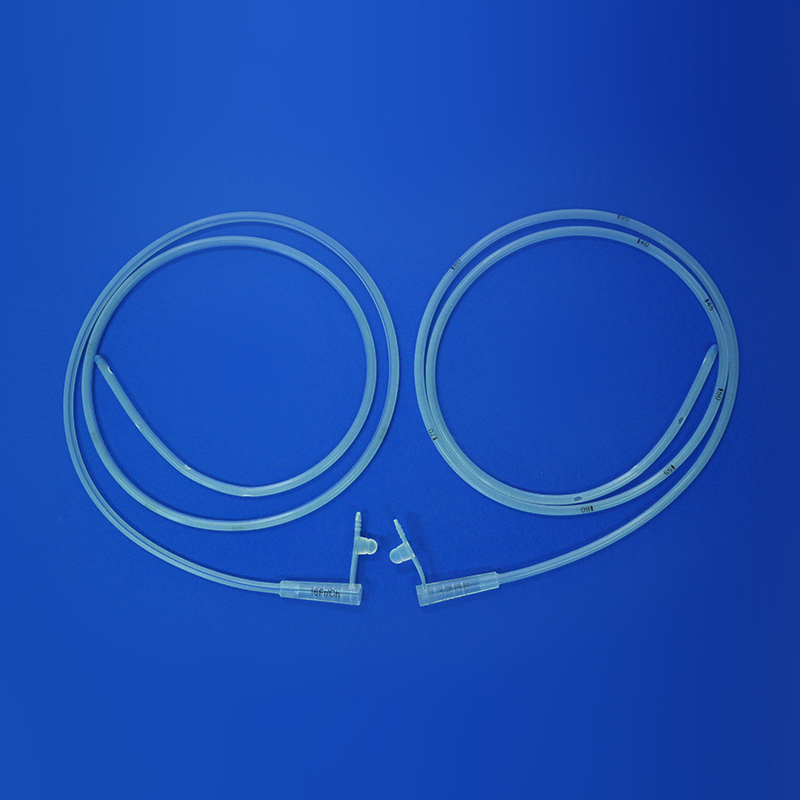
Drainage tube: Multi-fenestrated silicone tube placed in the wound cavity
Connector: Connects the drainage tube to the collection tubing
Collection tubing: Transfers fluid from the wound to the reservoir
Reservoir: Compressed bulb or bellows that generates negative pressure and collects drained fluid
Silicone requirements for active drainage tubes:
Shore A 40–55 (balance of flexibility and suction collapse resistance)
Wall thickness 1.2–2.0mm (suction resistance)
Smooth inner surface (patency maintenance)
Clean fenestrations with smooth edges
Radiopaque stripe (placement verification)
Full ISO 10993 prolonged tissue contact biocompatibility
Reservoir options:
Reservoir Type | Volume | Suction Mechanism | Typical Application |
Bulb reservoir (JP-type) | 100ml, 200ml | Compressed bulb — squeeze to evacuate | General surgical drainage, mastectomy, hernia |
Bellows reservoir | 200ml, 400ml | Accordion bellows — compress to evacuate | Orthopedic, thoracic, high-volume drainage |
Flat reservoir | 100ml, 200ml | Flat compressed pouch | Low-profile applications, ambulatory patients |
Gravity bag | 500ml, 1000ml | No active suction — gravity collection | High-volume passive drainage, thoracic |
At Chensheng Medical, our closed wound drainage systems are available with 200ml and 400ml bellows reservoirs — the most widely used configuration for post-surgical orthopedic and general surgical drainage. Custom reservoir volumes and configurations are available for OEM projects.
Part 3: Silicone Material Selection for Drainage Applications
Why Platinum-Cured Silicone Is Non-Negotiable
For wound drainage tubes in prolonged tissue contact (>24 hours), platinum-cured silicone is the only acceptable compound choice. The reasons are both clinical and regulatory:
Clinical: Peroxide-cured silicone contains residual by-products — acetophenone, benzoic acid, and other volatile organic compounds — that can leach into wound fluid and surrounding tissue. These compounds are cytotoxic at sufficient concentrations and can cause local tissue irritation, delayed healing, and inflammatory responses. In a wound that is already in a healing-critical state, any material-induced inflammation is clinically unacceptable.
Regulatory: ISO 10993-5 cytotoxicity testing of peroxide-cured silicone frequently shows reduced cell viability — particularly in extract-based tests where the extractables concentration is high. A peroxide-cured drainage tube that fails cytotoxicity testing cannot be used in a patient-contact application. Platinum-cured silicone consistently passes ISO 10993-5 testing because its curing chemistry produces no cytotoxic by-products.
For a detailed technical comparison of platinum-cured and peroxide-cured silicone — including the specific by-products of concern and their clinical implications — see: Platinum-Cured vs. Peroxide-Cured Silicone: Which Is Better for Your Application?
Shore A Hardness Selection for Drainage Tubes
Shore A hardness selection for drainage tubes involves balancing three competing requirements:
Requirement | Favors Softer (Lower Shore A) | Favors Firmer (Higher Shore A) |
Patient comfort | ✅ Softer is more comfortable | — |
Tissue trauma on insertion | ✅ Softer causes less trauma | — |
Kink resistance | — | ✅ Firmer resists kinking |
Suction collapse resistance | — | ✅ Firmer resists collapse |
Fenestration integrity | — | ✅ Firmer maintains hole geometry |
Long-term indwelling stability | — | ✅ Firmer maintains shape over time |
Recommended Shore A ranges by drainage application:
Application | Shore A | Rationale |
Penrose drain (passive) | 25–35 | Maximum softness — tissue conformability priority |
Superficial wound drain | 35–45 | Soft but with sufficient integrity for fenestrations |
General surgical closed drain (JP-type) | 40–50 | Balance of comfort and suction resistance |
Orthopedic closed drain | 45–55 | Higher suction resistance for joint cavity drainage |
Thoracic drain (chest tube) | 50–60 | High suction resistance, kink resistance critical |
Deep cavity drain (prolonged indwelling) | 45–55 | Durability for 5–7 day indwelling applications |
For a comprehensive guide to Shore A hardness selection across all medical silicone applications, see: Silicone Shore A Hardness Explained: How to Select the Right Durometer for Your Medical Application
Wall Thickness and Suction Collapse Resistance
For active drainage systems, the tube must resist collapse under the negative pressure generated by the reservoir. The critical pressure is the maximum negative pressure the reservoir can generate — typically:
JP-type bulb reservoir: −60 to −80 mmHg (−8 to −11 kPa)
Bellows reservoir: −80 to −120 mmHg (−11 to −16 kPa)
Wall suction (hospital): −80 to −200 mmHg (−11 to −27 kPa)
The minimum wall thickness to resist collapse at a given negative pressure depends on the tube ID, Shore A hardness, and the silicone's elastic modulus. As a practical guideline:
Tube ID | Minimum Wall Thickness (Shore A 45–55) | Minimum Wall Thickness (Shore A 55–65) |
4mm | 1.0mm | 0.8mm |
6mm | 1.2mm | 1.0mm |
8mm | 1.5mm | 1.2mm |
10mm | 1.8mm | 1.5mm |
12mm | 2.0mm | 1.8mm |
Values are approximate guidelines for bellows reservoir suction (−120 mmHg). For wall suction applications, increase wall thickness by 20–30%.

Part 4: Drainage Tube Geometry — Dimensions, Fenestrations, and Tip Design
Standard Drainage Tube Dimensions
Drainage tube dimensions are typically specified in French (Fr) size — the outer circumference in millimeters, where 1 Fr = 1/3 mm OD. Common sizes for wound drainage:
French Size | OD (mm) | Typical ID (mm) | Typical Application |
10 Fr | 3.3mm | 1.5–2.0mm | Superficial wounds, pediatric |
12 Fr | 4.0mm | 2.0–2.5mm | General surgical, small cavities |
14 Fr | 4.7mm | 2.5–3.0mm | General surgical, standard |
16 Fr | 5.3mm | 3.0–3.5mm | Orthopedic, moderate drainage |
19 Fr | 6.3mm | 3.5–4.5mm | High-volume drainage, orthopedic |
24 Fr | 8.0mm | 5.0–6.0mm | Thoracic, high-volume |
28 Fr | 9.3mm | 6.0–7.0mm | Chest tube, pleural drainage |
32 Fr | 10.7mm | 7.0–8.0mm | Chest tube, large pleural effusion |
Fenestration Design
Fenestrations (side holes) allow fluid collection from multiple points along the drainage tube. Key design parameters:
Number of fenestrations: Typically 4–8 holes along the distal 5–10cm of the tube. More fenestrations increase drainage area but reduce tube wall integrity. For tubes with OD < 5mm, limit to 4 fenestrations to maintain structural integrity.
Fenestration geometry: Round holes (punched) are standard. Oval or slot fenestrations provide greater drainage area per hole but require more precise manufacturing to maintain edge quality.
Fenestration size: Typically 30–50% of the tube OD. Larger fenestrations increase drainage but reduce collapse resistance. For suction drainage, fenestration area should not exceed 40% of the tube cross-sectional area.
Edge quality: This is the most clinically critical manufacturing parameter for fenestrations. Rough, burr-edged, or incompletely cut fenestrations:
Cause tissue trauma during insertion and removal
Promote fibrin and clot attachment, leading to tube occlusion
Create stress concentration points that can lead to tube fracture during removal
Manufacturing standard: Fenestrations must be cut with a precision die punch on a supported mandrel, producing clean, smooth edges with no burrs, tears, or silicone tags. Laser cutting produces the cleanest fenestration edges for small-diameter tubes.
Fenestration placement: The proximal fenestration should be at least 1cm from the tube tip to prevent tip occlusion. The distal fenestration should be at least 0.5cm from the tip. Fenestration spacing should be uniform along the drainage zone.
Tip Design Options
Tip Type | Description | Clinical Application |
Round (closed) tip | Smooth, rounded closed end | Standard — minimizes tissue trauma on insertion |
Open tip | Open-ended tube | High-flow drainage; tip occlusion risk higher |
Trocar tip | Pointed tip for trocar-assisted placement | Minimally invasive insertion |
Fluted (Blake-type) | Four longitudinal channels along a solid core | Continuous drainage along entire length; anti-occlusion |
Flat (Penrose-type) | Flat cross-section | Passive drainage; maximum tissue conformability |
Radiopaque Stripe Specification
For drainage tubes requiring X-ray visualization, a radiopaque stripe is incorporated into the silicone wall during extrusion. Standard specifications:
Radiopaque agent: Barium sulfate (BaSO₄) — most common; bismuth subcarbonate for applications requiring higher radiopacity
Stripe width: 1–2mm (visible on standard X-ray)
Stripe position: Along the length of the tube, typically at the 12 o'clock position
Radiopaque agent concentration: 20–30% BaSO₄ by weight in the stripe compound
Biocompatibility: The radiopaque compound must have independent ISO 10993 biocompatibility documentation — the filler material itself must be evaluated, not just the base silicone
Part 5: Regulatory and Biocompatibility Requirements
Device Classification
Wound drainage systems are classified as medical devices in all major regulatory markets. Classification depends on the intended use and contact duration:
Market | Classification | Regulatory Pathway |
United States (FDA) | Class II (most wound drains) | 510(k) premarket notification; predicate device required |
European Union (EU MDR) | Class IIa (short-term invasive) / Class IIb (prolonged invasive) | CE marking via Notified Body |
China (NMPA) | Class II | Medical device registration |
Canada (Health Canada) | Class II | Medical device licence |
Australia (TGA) | Class IIa | ARTG inclusion |
Contact duration classification (EU MDR / ISO 10993-1):
Short-term contact: < 24 hours
Prolonged contact: 24 hours to 30 days
Long-term contact: > 30 days
Most post-surgical wound drains fall into the prolonged contact category (24 hours to 30 days), which requires a more extensive biocompatibility evaluation than short-term contact devices.
Required Biocompatibility Testing
For a silicone wound drainage tube in prolonged tissue contact, the minimum ISO 10993 biocompatibility evaluation includes:
ISO 10993 Endpoint | Test Standard | Required For |
Cytotoxicity | ISO 10993-5 | All patient-contact devices |
Sensitization | ISO 10993-10 | All patient-contact devices |
Irritation / skin reaction | ISO 10993-10 | Tissue-contact devices |
Systemic toxicity (acute) | ISO 10993-11 | Prolonged contact devices |
Subacute/subchronic toxicity | ISO 10993-11 | Prolonged contact devices (>24h) |
Genotoxicity | ISO 10993-3 | Prolonged contact devices |
Implantation | ISO 10993-6 | Devices implanted in tissue |
Hemocompatibility | ISO 10993-4 | Blood-contacting devices only |
⚠️ Important: The biocompatibility evaluation must be conducted on the finished, sterilized device — not on the raw silicone compound alone. Sterilization (particularly EtO) can introduce new extractables that must be evaluated. A supplier who provides only compound-level biocompatibility data (USP Class VI, ISO 10993-5 on raw compound) is not providing sufficient documentation for a finished device submission.
For a complete guide to biocompatibility certification requirements and how to interpret test reports, see: USP Class VI, ISO 10993, and FDA 21 CFR 177.2600: Which Certification Do You Actually Need?
Sterilization Requirements
Closed wound drainage systems are supplied sterile, with EtO sterilization as the industry standard:
Why EtO for drainage systems:
Low temperature — does not affect silicone properties or reservoir integrity
Excellent penetration of complex geometries (tubing lumens, reservoir folds)
Compatible with the multi-material assemblies typical of drainage systems (silicone tube + connector + reservoir)
Industry-validated for this product category
EtO residuals requirement: Per ISO 10993-7, EtO residuals must be within limits for prolonged contact devices:
EtO: ≤ 2 mg/device
Ethylene chlorohydrin (ECH): ≤ 2 mg/device
Ethylene glycol (EG): ≤ 40 mg/device
Silicone drainage tubes with thick walls or complex geometries require extended aeration to achieve these limits. Aeration validation must be conducted specifically for the finished device configuration — not extrapolated from tubing-only data.
For a complete comparison of sterilization methods and their effects on medical silicone, see: Sterilization Methods for Medical Silicone Products: Autoclave, EtO, Gamma, and E-Beam Compared

Part 6: Closed Wound Drainage System — Complete Assembly Specification
A complete closed wound drainage system consists of multiple components, each with its own specification requirements. Here is the complete assembly breakdown for a standard bellows-type closed suction drainage system:
Component 1: Drainage Tube
Parameter | Specification |
Material | Platinum-cured medical silicone |
Shore A hardness | 45–55 (general surgical) |
OD | 5.3–8.0mm (14–24 Fr) |
Wall thickness | 1.2–1.8mm |
Drainage zone length | 80–120mm |
Fenestrations | 6–8 holes, round, smooth edges |
Tip | Round closed tip |
Radiopaque stripe | BaSO₄ stripe, 1.5mm width |
Color | Transparent or white |
Certifications | USP Class VI · ISO 10993-5, -10, -11 · FDA 21 CFR 177.2600 |
Component 2: Connection Tube
Parameter | Specification |
Material | Platinum-cured medical silicone or medical-grade PVC |
Length | 300–500mm (application-dependent) |
ID | 4–6mm |
Wall thickness | 1.0–1.5mm |
Function | Transfers fluid from drainage tube to reservoir |
Component 3: Bellows Reservoir
Parameter | Specification |
Material | Medical-grade EVA or TPU |
Volume | 200ml or 400ml |
Operating suction | −80 to −120 mmHg when fully compressed |
Graduation markings | Every 20ml (200ml reservoir) or 50ml (400ml reservoir) |
Cap | Luer-lock or proprietary — must seal completely to maintain suction |
Transparency | Clear — fluid level and color visible |
Component 4: Connector
Parameter | Specification |
Material | Medical-grade ABS or PC |
Function | Connects drainage tube to connection tube |
Retention force | Minimum 15N pull-out force |
Design | Y-connector (for dual-tube systems) or straight connector |
Complete System Packaging
Parameter | Specification |
Primary packaging | Individual sterile Tyvek/film peel pouch |
Sterilization | EtO — validated per ISO 11135 |
Shelf life | 2 years minimum (accelerated aging validated per ASTM F1980) |
Labeling | Per FDA 21 CFR Part 801 / EU MDR UDI requirements |
Secondary packaging | Individual carton with IFU |
Part 7: OEM and Private Label Development
For medical device companies developing branded closed wound drainage systems, Chensheng Medical offers complete OEM development from concept to finished sterile product.
OEM Development Process
Stage 1: Requirements Definition (Week 1–2)
Provide us with:
Target French size(s) and drainage tube length
Reservoir volume (200ml, 400ml, or custom)
Target market(s) and regulatory pathway (FDA 510(k), CE, NMPA)
Annual volume forecast
Private label / packaging requirements
Any existing predicate device or reference product
Stage 2: Engineering Review and DFM (Week 2–4)
Our engineering team conducts:
Design for Manufacturability (DFM) review
Material selection confirmation (silicone compound, reservoir material, connector material)
Fenestration design optimization
Dimensional tolerance analysis
Regulatory classification confirmation
Stage 3: Tooling and First Article (Week 4–14)
Extrusion tooling for drainage tube (customer-owned tooling, no ongoing storage fees)
Mold tooling for connector components
First article samples (T1) produced and submitted with dimensional report and visual inspection report
Stage 4: Sample Validation (Week 14–20)
Customer conducts:
Dimensional verification against drawing
Functional testing (suction retention, drainage flow rate, fenestration integrity)
Biocompatibility review (we provide full documentation package)
Sterilization compatibility testing (EtO cycle with residuals testing)
Stage 5: Production Approval (Week 20–24)
T2 samples (if required based on T1 feedback)
Golden Sample establishment — locked reference standard
Process parameters locked and documented
First production lot with full CoA
Stage 6: Ongoing Production
Lot-specific CoA with every shipment
Annual product review
Change notification per Quality Agreement
Private Label Packaging
We support complete private label packaging for OEM customers:
Custom printed Tyvek/film peel pouches with your brand, logo, and regulatory markings
Custom printed secondary cartons with IFU integration
UDI barcode generation and label printing
Multi-language labeling for global market distribution
Minimum order quantity for private label packaging: 500 units per SKU.
Part 8: Sourcing and Supplier Qualification — Key Questions to Ask
When evaluating silicone drainage tube suppliers — whether for standard products or OEM development — the following questions reveal the critical differences between qualified manufacturers and unqualified traders.
1. "What curing system does your drainage tube silicone use — platinum or peroxide?"For prolonged tissue contact applications, only platinum-cured is acceptable. A supplier who cannot confirm platinum-cured compound, or who offers peroxide-cured as an equivalent, should be disqualified.
2. "Can you provide ISO 10993-11 systemic toxicity test data for your drainage tube silicone — not just ISO 10993-5 cytotoxicity?"Prolonged contact devices require systemic toxicity evaluation. Many suppliers have cytotoxicity data but not systemic toxicity data. This gap will appear in your regulatory submission review.
3. "Are your biocompatibility test reports conducted on the finished, sterilized device or on the raw compound?"Finished device testing is required for regulatory submissions. Compound-only testing is insufficient.
4. "Can you show us the fenestration cutting process — specifically, how you ensure clean edges with no burrs?"Request a video of the fenestration process. Die punch on a supported mandrel, or laser cutting, are the acceptable methods. Hand-cutting or rotary cutting without mandrel support produces inconsistent edge quality.
5. "What is your dimensional tolerance for drainage tube OD and ID, and how is it monitored during production?"For drainage tubes, ±0.10mm on OD and ID is the minimum acceptable tolerance. Monitoring should be continuous laser micrometer, not periodic manual measurement.
6. "What is your EtO residuals test protocol, and can you provide the most recent residuals test report?"For prolonged contact devices, EtO residuals must be within ISO 10993-7 limits for prolonged contact — stricter than the limits for short-term contact. Request the actual test report, not just a certificate.
7. "Can you provide a complete documentation package for a 510(k) submission — including ISO 10993 biological evaluation report, sterilization validation, and shelf life data?"A qualified supplier understands what documentation a 510(k) requires and has it organized and ready. A supplier who responds with confusion or incomplete documentation will create delays in your regulatory submission.
For a complete framework for evaluating and qualifying medical silicone manufacturers, including remote audit protocols and certificate verification procedures, see: How to Choose a Reliable Medical Silicone Manufacturer in China
For guidance on building supply chain resilience for critical drainage system components, see: Medical Silicone Supply Chain Risk Management: How to Build a Resilient Sourcing Strategy
Chensheng Medical Drainage Products
Jinan Chensheng Medical Technology Co., Ltd. manufactures a complete range of silicone wound drainage tubes and closed suction drainage systems for global medical device companies and hospital procurement.
Standard product range:
Silicone drainage tubes: 10–32 Fr, with or without radiopaque stripe
Closed suction drainage systems: 200ml and 400ml bellows reservoir configurations
Penrose drains: flat silicone, Shore A 25–35, multiple widths
Custom OEM drainage systems: any specification, private label available
All products manufactured with:
Platinum-cured medical silicone compound
ISO Class 7 cleanroom production
ISO 13485 quality management system
Full biocompatibility documentation: USP Class VI · ISO 10993-5, -10, -11 · FDA 21 CFR 177.2600
EtO sterilization available with ISO 10993-7 residuals documentation
Lot-specific Certificate of Analysis with every shipment
→ Request Product Samples and Specifications→ Discuss Your OEM Drainage System Requirements→ Browse Our Medical Silicone Product Range
Frequently Asked Questions (FAQ)
Q1: What is the difference between a Jackson-Pratt drain and a Blake drain, and which silicone specification applies to each?
A: The Jackson-Pratt (JP) drain uses a round, multi-fenestrated silicone tube connected to a bulb reservoir. The Blake drain uses a fluted silicone tube — four longitudinal channels along a solid core — that provides drainage along the entire length rather than only at fenestration points. JP drains are more widely used for general surgical and mastectomy applications; Blake drains are preferred for orthopedic and thoracic applications where continuous drainage along the tube length is important. Both require platinum-cured silicone with full ISO 10993 prolonged contact biocompatibility. The Blake drain's fluted geometry requires more complex extrusion tooling and tighter dimensional control than a round JP drain tube.
Q2: What French size should I specify for a general surgical closed wound drain?
A: For general surgical applications (abdominal, breast, hernia, soft tissue), 14–19 Fr (4.7–6.3mm OD) is the standard range. 14 Fr is appropriate for superficial wounds with low drainage volume; 19 Fr is appropriate for deeper cavities or higher-volume drainage. For orthopedic applications (joint replacement, spinal surgery), 19–24 Fr is typically used. For thoracic drainage (chest tubes), 24–32 Fr is standard. If you are developing an OEM product, we recommend providing us with the target anatomical application and expected drainage volume — our applications engineering team can recommend the optimal French size and reservoir volume combination.
Q3: Is a radiopaque stripe required on all wound drainage tubes?
A: Radiopaque stripes are not universally required, but they are standard practice for drainage tubes placed in deep surgical cavities where tube position cannot be visually confirmed. For superficial wound drains where the tube exit site is visible, radiopaque stripes are optional. For thoracic drains, abdominal drains, and any drain placed in a body cavity, a radiopaque stripe is clinically important for placement verification and is required by most hospital protocols. We recommend including a radiopaque stripe as standard for any drainage tube intended for deep cavity placement.
Q4: Can silicone drainage tubes be reused after sterilization?
A: No. Silicone wound drainage tubes are single-use devices. Reprocessing and reuse of drainage tubes is clinically contraindicated because: (1) the fenestrations and inner lumen cannot be reliably cleaned of biological material; (2) repeated sterilization cycles degrade the silicone properties over time; (3) single-use labeling is a regulatory requirement for devices supplied sterile. Reuse of single-use drainage devices is prohibited in most regulatory markets and creates significant liability exposure. Our drainage tubes are labeled "Single Use Only" and are not designed or validated for reprocessing.
Q5: What is the typical lead time for OEM silicone drainage tube development?
A: For a standard round drainage tube in a new French size (requiring new extrusion tooling), the timeline from drawing confirmation to first production samples is typically 8–12 weeks. For a complete closed suction drainage system (drainage tube + connector + reservoir + packaging), the total development timeline from requirements definition to first production lot is typically 20–28 weeks. This timeline can be compressed if the customer provides complete drawings and specifications upfront, and if biocompatibility review can leverage existing compound-level documentation. Contact our OEM development team with your specific requirements for a project-specific timeline.
Q6: What documentation do you provide to support a 510(k) submission for a wound drainage system?
A: For OEM customers developing FDA 510(k) submissions, we provide a complete technical documentation package including: ISO 13485 certificate and scope; ISO 10993 biological evaluation report (covering cytotoxicity, sensitization, irritation, systemic toxicity, and genotoxicity for prolonged contact classification); USP Class VI test report; FDA 21 CFR 177.2600 compliance statement; EtO sterilization validation report (ISO 11135) with ISO 10993-7 residuals data; shelf life validation data (accelerated aging per ASTM F1980); dimensional drawings with tolerances; and lot-specific Certificate of Analysis. We have supported multiple successful 510(k) submissions and understand the documentation requirements of FDA reviewers.
Q7: We currently source drainage tubes from a European supplier. Can Chensheng Medical match the specification exactly?
A: Yes. We regularly qualify as a secondary or replacement source for customers currently sourcing from European or North American suppliers. Provide us with your current drawing, specification, and a physical sample if available — our engineering team will conduct a dimensional analysis and material assessment to confirm we can match the specification. For regulated devices, switching suppliers requires a formal change control process and re-qualification testing, which we can support with our documentation package. In most cases, we can provide qualification samples within 6–10 weeks of drawing confirmation.
Related Articles:
Platinum-Cured vs. Peroxide-Cured Silicone: Which Is Better for Your Application?
USP Class VI, ISO 10993, and FDA 21 CFR 177.2600: Which Certification Do You Actually Need?
Sterilization Methods for Medical Silicone Products: Autoclave, EtO, Gamma, and E-Beam Compared
Silicone Shore A Hardness Explained: How to Select the Right Durometer for Your Medical Application
How to Choose Medical Grade Silicone Tubing: A Complete Specification and Sourcing Guide
How to Choose a Reliable Medical Silicone Manufacturer in China
Medical Silicone Supply Chain Risk Management: How to Build a Resilient Sourcing Strategy