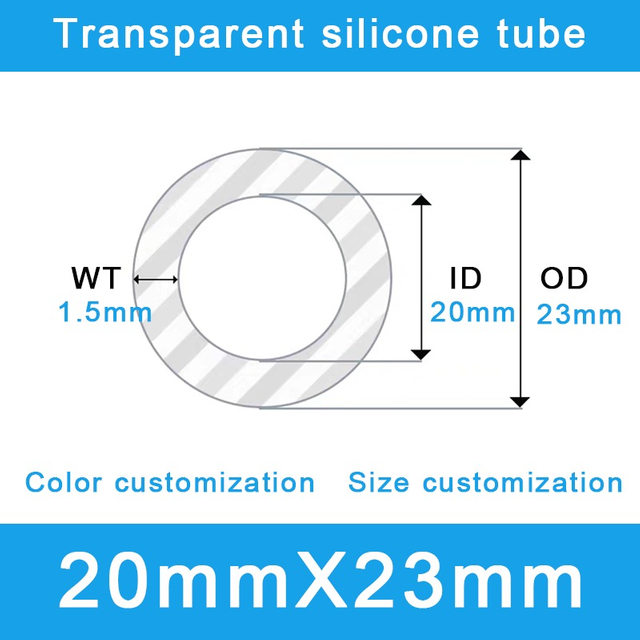
A hospital procurement manager in Frankfurt once told me she had spent three weeks trying to find a replacement for a discontinued OEM silicone tube — same dimensions, same certifications — and ended up paying 40% more just because she didn't know what documentation to ask for upfront.
That conversation stuck with me. After more than a decade sourcing and supplying medical silicone tubing to healthcare buyers in over 30 countries, I've seen the same confusion play out repeatedly: buyers don't know what "medical grade" actually means, which certifications are legally required vs. marketing language, or how to pressure-test a supplier's claims before a purchase order is signed.
This guide is my attempt to give you what I wish those buyers had earlier.
What "Medical Grade" Actually Means (and What It Doesn't)
The phrase "medical grade" is used so loosely in product catalogs that it has become nearly meaningless on its own. What you actually need to ask about is the specific testing the material has undergone and what patient-contact scenarios it has been validated for.
There are three regulatory frameworks that genuinely matter for silicone tubing in healthcare:
USP Class VI Certification
The United States Pharmacopeia (USP) Class VI standard is the most commonly cited benchmark for medical-contact silicone. It requires three biological test cycles:
Systemic injection test — evaluates whether material extracts cause acute toxicity when injected into animals
Intracutaneous test — assesses local tissue reactivity
Implantation test — measures tissue response after the material is surgically implanted for 5–90 days
USP Class VI is not an FDA requirement by itself — it's a material characterization standard. But it has become a de facto procurement benchmark because it gives buyers a consistent, documented baseline for biocompatibility. If a supplier can't provide the actual test report (not just a certificate), ask why.
One important nuance: USP Class VI was officially retired from the USP General Chapters in 2016 and replaced by broader ISO 10993-based biocompatibility evaluation. However, many global buyers and regulatory submissions still reference USP Class VI language. When you see it on a data sheet, ask whether the testing was conducted to the legacy USP protocol or the current ISO 10993 framework — both are valid, but they are different.
FDA Compliance: 21 CFR and What It Covers
For the U.S. market, FDA regulations under 21 CFR govern materials used in medical contexts:
Regulation
Scope
21 CFR 177.2600
Rubber articles for repeated use (covers most medical silicone tubing)
21 CFR 177.1550
Perfluorocarbon resins (less commonly applicable)
FDA Establishment Registration
Required for manufacturers of medical devices
A critical distinction that trips up buyers: "FDA compliant" is not the same as "FDA cleared." Tubing material can comply with 21 CFR 177.2600, but a finished medical device incorporating that tubing typically requires its own 510(k) clearance or 513(f)(2) De Novo pathway review. If your device needs a clearance, your tubing supplier's material compliance is a necessary input — not a substitute for your own regulatory work.
ISO 10993 and ISO 13485: The International Standards Pair
ISO 10993 is the international standard series for biological evaluation of medical devices. It covers cytotoxicity, sensitization, irritation, systemic toxicity, genotoxicity, and more — a more comprehensive framework than USP Class VI alone.
ISO 13485 is separate and equally important: it certifies that a manufacturer's quality management system meets the requirements for medical device production. An ISO 13485-certified supplier has documented design controls, production validation, corrective action systems, and traceability. This matters enormously when something goes wrong — and in medical procurement, eventually something always does.
At Jinan Chensheng, we hold ISO 13485 certification alongside FDA, CE, and NMPA registrations. I mention this not as a marketing line, but because I've seen buyers discover post-order that a supplier's "certifications" were expired or covered a different product category than what was purchased.
The Technical Specifications That Actually Determine Performance
Certifications tell you a material is safe. Technical specifications tell you whether it will work.
Temperature Range
Platinum-cured (addition-cure) silicone tubing is the standard for demanding medical applications. It handles a continuous operating range of approximately -60°C to +200°C, with intermittent steam sterilization tolerance up to 135°C.
The distinction between platinum-cured and peroxide-cured silicone matters here:
Platinum cured: Lower extractables, better optical clarity, more stable under repeated autoclave cycles, higher initial cost
Peroxide cured: More economical, suitable for less critical applications, may leave cure byproduct residues that require post-cure processing
For any application involving repeated autoclave sterilization (121°C–134°C, multiple cycles), specify platinum-cured explicitly in your purchase order. Don't assume.
Dimensional Tolerances
In my experience, dimensional consistency is where off-the-shelf silicone tubing fails most often. Standard commercial tolerances of ±0.2mm on inner diameter are acceptable for fluid transfer with loose flow requirements. But for peristaltic pump tubing, where wall thickness directly determines flow accuracy, you need ±0.05mm or tighter.
Ask your supplier for lot-to-lot tolerance data, not just nominal spec sheet values. The difference between "we can hit that tolerance" and "we routinely achieve that tolerance and have the QC records to prove it" is substantial.
Mechanical Properties: What to Request
Property
Typical Range
Why It Matters
Hardness (Shore A)
30–80
Flow behavior, kink resistance, pump head wear
Tensile strength
≥7 MPa
Resistance to tearing under pressure cycling
Elongation at break
400–600%
Flexibility without failure
Compression set (22h/70°C)
<25%
Seal integrity over time
Tear resistance
≥25 kN/m
Durability during installation and handling
Matching Tubing to Common Healthcare Applications
Peristaltic Pump Systems
Peristaltic pump tubing fails for one of three reasons: wrong durometer (too hard or too soft for the pump head), poor compression set recovery (leading to flow drift over time), or inconsistent wall thickness causing calibration errors.
When specifying pump tubing, get the pump manufacturer's recommended durometer range and match it precisely. A 5-point Shore A difference can meaningfully change your calibration curve. We regularly work with buyers to match existing pump head specifications when they're replacing a discontinued OEM tube — if you have the pump model, we can usually match the functional parameters.
Respiratory and Anesthesia Circuits
Breathing circuit tubing must remain kink-free under patient movement, connect securely to ISO 5367-compliant fittings, and withstand EtO or gamma sterilization without off-gassing residuals that could affect patient airways.
Clarity is also a practical requirement, not just a cosmetic one: clinical staff need to see condensate accumulation and detect any contamination visually.
IV Fluid Transfer and Pharmaceutical Processing
For pharmaceutical-contact applications, the extractables and leachables (E&L) profile of the tubing is the dominant concern. This is separate from biocompatibility testing — it characterizes what specific chemical compounds may migrate into a fluid under various conditions (temperature, pH, exposure time).
Ask suppliers for E&L testing data, not just a biocompatibility certificate. If they don't have it for pharmaceutical applications, that's a red flag.
How to Evaluate a Supplier Before You Commit
I've audited our own manufacturing processes dozens of times preparing for customer visits, and I know what serious buyers look at. Here's a practical checklist:
Documentation to request before sampling:
ISO 13485 certificate (check the expiry date and scope)
FDA Establishment Registration number (verifiable at accessdata.fda.gov)
Biocompatibility test reports (not just certificates — full reports with test dates and lab identity)
Certificate of Analysis (CoA) template showing what's tested per lot
Extractables data (for pharmaceutical applications)
During sample evaluation:
Request samples from at least two separate production lots
Test under your actual operating conditions — temperature, chemical exposure, sterilization cycles — not bench conditions
Measure dimensional consistency yourself; don't rely on supplier CoA alone
Questions that reveal supplier maturity:
"What is your process for investigating and documenting a material non-conformance?"
"Can you trace this lot of tubing to specific raw material batches?"
"What lead time do you commit to for reorders, and what's your capacity buffer for surge orders?"
A supplier who struggles to answer these questions confidently is not ready for healthcare procurement, regardless of what their certificate says.
Frequently Asked Questions
What's the practical difference between food grade and medical grade silicone tubing?
Food grade silicone complies with 21 CFR 177.2600 for food contact but has not necessarily undergone tissue biocompatibility testing. Medical grade silicone has been tested (USP Class VI, ISO 10993, or both) for human tissue contact. Never substitute food grade for medical grade in patient-contact applications — the regulatory and liability implications are significant.
How many autoclave cycles can medical silicone tubing withstand?
Platinum-cured medical silicone tubing typically tolerates 200–500 autoclave cycles (121°C, 15 minutes) before significant hardness or dimensional changes occur. This varies by formulation and wall thickness. Ask your supplier for their validated cycle data, not just a general claim.
What does "platinum cured" mean for extractables?
Platinum-catalyzed addition cure leaves no cure byproduct residues (unlike peroxide cure, which can leave peroxide decomposition products). This results in lower extractables, which matters for pharmaceutical fluid contact and for applications where residual chemistry affects patient safety or assay performance.
How do I verify an ISO 13485 certificate is legitimate?
ISO 13485 certificates are issued by accredited certification bodies (e.g., BSI, TÜV, SGS, Bureau Veritas). You can verify the certificate's authenticity by contacting the issuing certification body directly with the certificate number. I'd encourage all buyers to do this — certificate forgery is not unheard of in the industry.
Is platinum-cured silicone tubing worth the price premium for all applications?
Not always. For non-pharmaceutical fluid transfer with no repeated sterilization requirement and no tissue contact, peroxide-cured silicone may be entirely appropriate and cost-effective. The premium for platinum-cured is justified when you need lower extractables, better autoclave durability, or higher optical clarity.
A Final Note on Procurement Strategy
The buyers I've seen make the best decisions aren't necessarily the ones who know the most about silicone chemistry — they're the ones who know the right questions to ask and who build relationships with suppliers who will answer them honestly.
If you're replacing a discontinued OEM tube, bring us the original part number, your pump or device model, and your key performance requirements. In most cases, we can match or exceed OEM specifications at a lower total cost, with full documentation for your regulatory file.
About the Author
Winnie Zhao is Foreign Trade Director at Jinan Chensheng Medical Technology Co., Ltd., a manufacturer of medical-grade silicone products based in Jinan, China. The company holds ISO 13485, FDA, CE, and NMPA certifications and supplies healthcare buyers in more than 30 countries. Winnie leads international sales and technical consultation for medical device and pharmaceutical customers.
Have a specific tubing requirement? Contact our technical team to discuss your application.
Chensheng – China’s Leading Silicone Product Manufacturer
Choose Chensheng, and gain a trusted partner with over 20 years of OEM/ODM expertise. We deeply understand your needs and deliver professional, reliable, and tailored silicone solutions.